

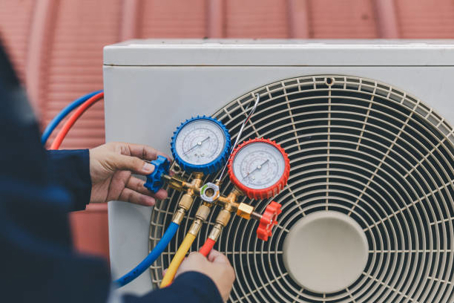
If your power bill jumps every summer in Greenville, even though you never touch the thermostat, you are not imagining it. Our climate puts your heating and cooling system to the test for much of the year, and that shows up in longer run times and higher energy use. The good news is that you can usually gain back a lot of efficiency with targeted seasonal tweaks instead of drastic changes.
Greenville sees sticky, high-humidity summers, damp winter chills, and wild swings in between. Those shifts change how your HVAC system needs to run, but many homes are set up the same way in July as they are in January. That mismatch leaves you uncomfortable and paying more than you should, even if you already own a relatively efficient system.
At Guthrie Heating, we have spent more than 30 years working on HVAC systems in Greenville homes, from older houses near downtown to newer construction on the outskirts. Season after season, we see the same patterns that drive up energy use and strain equipment. In this guide, we share the practical steps we recommend to our own customers so you can improve seasonal HVAC efficiency in your Greenville home and know when it makes sense to call us for a closer look.
How Greenville’s Climate Impacts Seasonal HVAC Efficiency
Greenville’s climate places unique demands on HVAC systems, affecting how efficiently they perform throughout the year.
Summer:
High heat combined with heavy humidity means your system works to cool and remove moisture. This often leads to longer run times, even when the thermostat stays the same, which can drive up energy use on muggy afternoons.
Winter:
While winters are milder, damp, chilly air can make homes feel colder than the temperature suggests. Drafts, air leaks, and weak insulation cause heat loss, forcing your system to run longer to maintain comfort.
Spring & Fall:
Frequent temperature swings—cool mornings and warm afternoons—mean systems switch between heating and cooling often. At the same time, pollen, dust, and debris can clog filters and coils, reducing efficiency right before peak seasons.
What this means for efficiency:
- Real-world performance depends heavily on maintenance and airflow
- Humidity and air quality impact how hard your system works
- Lab ratings like SEER or AFUE don’t fully reflect local conditions
In Greenville, seasonal efficiency isn’t just about the equipment—it’s about how well your system is maintained and adjusted to handle the local climate.
Summer Strategies To Boost Cooling Efficiency In Greenville Homes
Greenville summers push HVAC systems hard. High heat and humidity mean your system must cool the air and remove moisture, leading to longer run times and higher energy use. A few practical adjustments can make a noticeable difference.
Set your thermostat strategically
- Keep temperatures in the mid-to-upper 70s when home
- Raise the setting slightly when you’re away
- Avoid setting it very low—systems cool at a steady rate, not faster
Improve airflow and system performance
- Check and replace air filters monthly during peak season
- Keep vents open and unobstructed
- Clear debris and maintain at least a couple of feet of space around the outdoor unit
Manage humidity for better comfort
- Use the fan on “auto” instead of “on” to prevent moisture from cycling back into the air
- Allow longer, steady cooling cycles for better dehumidification
Stay ahead with maintenance
Dirty coils, clogged filters, and restricted airflow all reduce efficiency. A seasonal inspection and cleaning helps your system handle Greenville’s heat with less strain and more consistent comfort.
Small changes in how your system runs can lead to lower energy bills and a more comfortable home throughout the summer.
Winter & Cold-Weather Tips For Efficient Heating In Greenville
Winter in Greenville may not bring months of snow, but it still tests heating systems, especially on those damp, penetrating cold days. Homes with drafts or thin insulation often feel colder than the thermostat suggests, which leads many people to keep nudging the setpoint higher. Setting your thermostat to a consistent, reasonable temperature when you are home, and slightly lower when you are asleep or away, is usually enough to stay comfortable if the home is sealed reasonably well.
If you heat with a heat pump, understanding how it behaves in our winter conditions can protect your efficiency. As outdoor temperatures drop, the heat pump must work harder to extract heat from the outside air, so it will run longer cycles, which is normal. Most systems also have auxiliary or backup electric heat that kicks in automatically when the heat pump cannot keep up. This backup heat uses much more electricity. If you frequently switch the thermostat to “emergency heat” or see that mode running a lot on milder days, that is a sign something is off, and bills can climb quickly.
Small building-envelope improvements go a long way. Checking weatherstripping around doors, sealing obvious gaps, and making sure curtains or blinds help insulate at night can reduce the load on your heating system. Ensuring that supply registers are not blocked by rugs, furniture, or long curtains helps distribute heat evenly, so you are less tempted to crank the thermostat to warm a stubborn room. We often find that uneven heating is more about airflow and leaks than about the equipment itself.
As with summer, filter changes remain key in winter. A clogged filter can cause a heat pump or furnace to overheat or short-cycle, both of which waste energy. We recommend checking filters monthly through the heating season and replacing as needed. Scheduling a heating tune-up with Guthrie Heating before the first real cold snap gives us a chance to verify heat pump performance, confirm that backup heat is staging correctly, and catch small issues before they turn into surprises on your winter power bill.
Spring & Fall: The Best Time For Seasonal HVAC Tune-Ups In Greenville
Spring and fall in Greenville may feel more comfortable, but they are not off-duty seasons for your HVAC system. Spring brings heavy pollen, dust, and sudden warm spells that have you reaching for the air conditioner again. Fall often covers outdoor units in leaves and debris while cooler nights start to nudge heating equipment back to life. These shoulder seasons are ideal times to set your system up for the hard work it will do in the months ahead.
During a spring cooling tune-up, we typically inspect and clean the indoor and outdoor coils, check refrigerant levels, verify electrical connections, and measure airflow. Each of these steps is tied directly to efficiency. A dirty coil insulates the system from the air it is trying to condition, so it must run longer to do the same job. Incorrect refrigerant charge can mean reduced capacity and higher bills. Loose electrical connections can cause motors to draw more current or fail prematurely. By addressing these issues before the heat and humidity peak, you give your system the best chance to run efficiently all summer.
In the fall, a heating-focused tune-up covers components like heat exchangers or heat pump defrost cycles, backup heat operation, and safety controls. We also look at ducts where we can access them easily, check thermostat calibration, and make sure condensate drains are clear. Even in our milder winters, a heat pump that struggles with defrost or a furnace with a failing component can waste energy and create comfort problems. Catching those issues before the first cold snap is far less stressful than dealing with them on the coldest night of the season.
There are tasks homeowners can safely manage between professional visits. Changing filters, keeping outdoor units clear of leaves and plants, and gently rinsing surface dirt from the outdoor coil fins with a garden hose (with the power off and without bending the fins) are all reasonable DIY steps. Digging into refrigerant circuits, opening equipment cabinets, or trying to adjust airflow and refrigerant charge should be left to trained technicians. At Guthrie Heating, our seasonal tune-ups are built around careful inspections and clear communication, so you know which items we have handled and what we recommend next, long before peak season hits.
Airflow, Ductwork, & Home Layout: Hidden Factors In Seasonal Efficiency
Even a high-efficiency HVAC unit cannot perform well if the air it conditions never reaches the rooms where you need it. Ductwork, airflow, and your home’s layout often explain why some rooms stay too hot in summer or too cold in winter, and why your system seems to run for long periods without truly stabilizing the house. These hidden factors are especially important in a climate like Greenville’s, where systems must run through long stretches of heat and humidity or damp chill.
Leaky or poorly insulated ducts can lose a surprising amount of cooled or heated air into attics, crawlspaces, and wall cavities. That lost air represents energy you pay for but never feel. In summer, this can mean the system runs much longer to satisfy the thermostat, driving up power use and straining components. In winter, the same leaks can leave distant rooms cooler, which tempts you to raise the thermostat a few degrees just to make that one area bearable.
Home layout introduces its own challenges. We frequently see bonus rooms over garages, finished basements, and glass-heavy sunrooms in Greenville that never feel quite right year-round. These spaces may be served by the same duct runs as interior rooms, even though their temperature gain or loss is very different. The result is a home where the thermostat location might be comfortable, but one or two rooms are always off, so the system runs longer and cycles more often than it would in a more balanced home.
Addressing these issues might involve duct sealing where accessible, adding insulation around problem runs, or adjusting dampers and registers to improve balance. In some cases, the best solution is a design change such as zoning or adding a separate ductless unit for a stubborn area. As part of our inspections, we look at accessible ductwork, listen to how your home behaves seasonally, and tailor recommendations so the system and ducts work together, instead of forcing equipment alone to overcome structural challenges.
When Zoning Or Ductless Mini-Splits Make Sense For Greenville Homes
For some homes, especially those with complex layouts or significant additions, improving seasonal efficiency means more than tuning up existing equipment. Zoning and ductless mini-split systems can be powerful tools to match heating and cooling more closely to how you actually use your house, instead of conditioning every room the same way all the time.
Zoning divides your home into separate areas, each with its own thermostat and control over how much heating or cooling it receives. For example, you might have one zone for the main living areas and kitchen, another for bedrooms, and a third for a finished bonus room above the garage. In Greenville summers, this lets you keep living spaces comfortable during the day without overcooling unused bedrooms, then shift focus at night. In winter, you can avoid overheating seldom-used areas just to warm the family room or home office.
Ductless mini-splits offer another option, especially when ductwork is limited or a particular room has very different needs from the rest of the house. A ductless system includes a compact indoor unit mounted on a wall or ceiling and a small outdoor unit, with no need to tie into existing ducts. We often see them used for Greenville homes with enclosed porches, garages converted to living space, or older houses where running new ductwork would be disruptive or inefficient. Because many ductless systems can ramp output up and down, they adapt well to seasonal changes, running gently during mild weather and working harder only when needed.
The main benefit of zoning and ductless mini-splits is control. Instead of pushing your central system harder to fix one or two rooms, you can target those areas directly. That usually leads to better comfort and reduced wasted energy, since you are not forced to overcondition the rest of the house. At Guthrie Heating, we design zoning solutions and ductless installations based on the specific trouble spots we see in your home. We focus on whether these upgrades will truly address your seasonal efficiency problems before recommending them, rather than treating them as a one-size-fits-all upgrade.
Simple Everyday Habits That Support Seasonal HVAC Efficiency
Alongside equipment and layout, your day-to-day habits play a meaningful role in how efficiently your system runs through Greenville’s seasons. The goal is not to obsess over every degree of temperature, but to build a few simple routines that keep airflow healthy and avoid making the system work harder than it needs to.
One of the most effective habits is a regular filter check. In peak cooling and heating months, looking at the filter monthly and replacing it when it appears dirty keeps airflow within the range your system was designed for. A clean filter helps maintain even temperatures, reduces strain on fans and compressors, and can even support longer equipment life. Keeping supply and return vents clear of furniture, rugs, and heavy drapes is just as important. Blocked vents restrict circulation, which leads to hot and cold spots and longer run times.
Window coverings and doors can also work for or against you. In summer, closing blinds or curtains on sun-facing windows during the hottest part of the day reduces the amount of heat that enters your home, so your air conditioner does not have to remove it later. In winter, opening those coverings on sunny days and closing them at night helps capture and keep natural warmth. What we do not recommend is closing off multiple vents or doors to save energy in unused rooms. That practice often upsets the pressure balance in the duct system, increases noise, and can actually reduce overall efficiency.
If you use a programmable or smart thermostat, setting a schedule that matches your routine and then largely letting it run that pattern tends to work better than constantly overriding it. For many Greenville households, that might mean modest setbacks during work hours and nighttime, rather than large swings. During service visits, we often help customers fine-tune thermostat programming for our local climate and show them how a few thoughtful adjustments can save energy without sacrificing comfort.
When To Call A Greenville HVAC Professional About Efficiency Concerns
Even with regular maintenance, some issues need a professional evaluation. If your energy bills increase without a clear reason, or your system runs constantly on mild days, there may be an underlying problem.
Watch for these warning signs:
- Uneven temperatures between rooms
- Frequent on-and-off cycling
- Ice on indoor or outdoor units
- Unusual noises or odors at startup
During an efficiency check, we look at the full system:
- Equipment size, age, and condition
- Refrigerant levels and airflow
- Ductwork for leaks or restrictions
- Thermostat accuracy and performance
- How insulation and layout affect comfort
From there, we recommend practical next steps—often starting with maintenance, repairs, or airflow improvements before considering larger upgrades. If needed, solutions like zoning or ductless systems may be discussed for long-term efficiency.
Our approach is straightforward: clear explanations, realistic options, and recommendations that match your home and budget. The goal is simple—improve comfort and reduce energy waste without unnecessary work.
Make Your Greenville Home More Efficient In Every Season
Greenville’s climate will always ask a lot of your HVAC system, but you are not stuck with high bills and uneven comfort. By aligning thermostat settings, simple maintenance, and, when necessary, system design with what our seasons actually demand, you can make meaningful progress toward a more efficient, comfortable home. Small steps like regular filter checks, thoughtful thermostat use, and timely tune-ups often deliver more benefit than homeowners expect.
If you are still fighting hot and cold spots, long run times, or power bills that do not match your usage, it may be time for a closer look from a local team that understands Greenville homes. We can evaluate your system, ducts, and layout, then recommend a seasonal efficiency plan that fits your home and your budget, from basic maintenance to zoning or ductless solutions when they truly make sense.
Call (864) 571-1279 to schedule a seasonal HVAC efficiency evaluation with Guthrie Heating.